
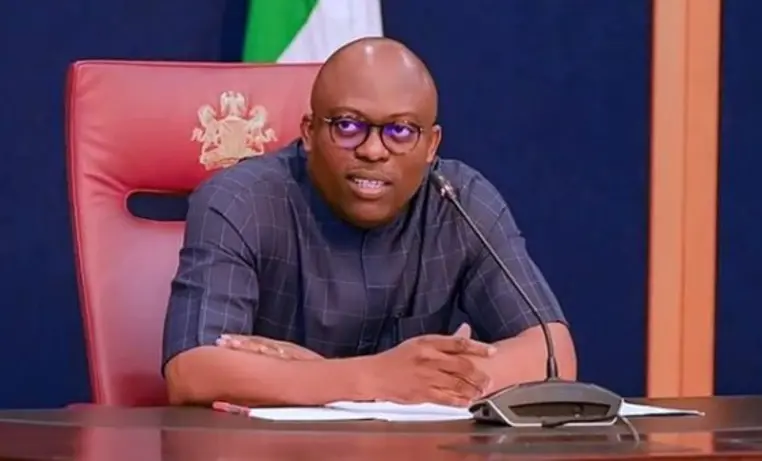
Rivers Impeachment Bid Loses Steam As Lawmakers, Traditional Rulers Push For Restraint
• Assembly members call for suspension of impeachment
• Traditional rulers step in with mediation committee
• IPAC rejects Wike’s “rainbow coalition” claim ahead of 2027
• Analyst says crisis reflects entrenched power struggles in Rivers politics
Signs of internal cracks have emerged within the Rivers State House of Assembly as more lawmakers retreat from the impeachment move against Governor Siminalayi Fubara, opting instead for dialogue amid rising political tensions.
Two additional legislators, Barile Nwakoh (Khana I) and Emilia Amadi (Obio/Akpor II), on Wednesday appealed to their colleagues to suspend impeachment proceedings against Governor Fubara and his deputy, Prof. Ngozi Odu. Their intervention came barely 48 hours after two other lawmakers made similar calls.
Although the lawmakers maintained that the governor and his deputy allegedly violated constitutional provisions, they said their appeal was informed by interventions from respected leaders within Rivers State who warned of the potential consequences of impeachment.
Also Read: Rivers Crisis Deepens asy Assembly Alleges Plot To Frustrate Fubara’s Impeachment
They urged the Assembly to halt further action and explore alternative mechanisms to de-escalate the crisis and restore political stability.
With the latest development, four of the 26 lawmakers who initially endorsed the impeachment notice have now publicly advocated a peaceful resolution, suggesting a growing reassessment of the political costs of escalation.
The House of Assembly is expected to reconvene today to deliberate further on the matter as the situation continues to evolve.
Earlier, Minority Leader Sylvanus Nwankwo (Omuma) and Peter Abbey (Degema) had also appealed for restraint, citing counsel from influential political figures within and outside the state who favoured dialogue over impeachment.
The renewed appeals have intensified calls for caution as Rivers navigates one of its most delicate political moments in recent history.
Traditional rulers move to mediate
In a parallel effort to calm tensions, the Rivers State Council of Traditional Rulers has inaugurated a nine-member committee to mediate in the political crisis.
The committee was announced in a statement signed by the council’s chairman, His Majesty Eze Chike Amadi Worlu-Wodo, and is tasked with engaging political actors and stakeholders across divides to chart a path toward reconciliation.
The panel is chaired by His Majesty Dr Suanu T. Y. Baridam, with His Majesty Eze Nwachukwu Nnam Obi as co-chairman. Other members include respected traditional rulers from across the state, while Barrister Darlington Owiriwa will serve as secretary.
Also Read: Fubara Voids N134b Rivers Secretariat Contract Approved Under Ibas, Orders Refund
The council described the situation as sensitive and urged all parties, including supporters and social media commentators, to exercise restraint.
“Given the delicate nature of the issues, we appeal to all factions and the general public to moderate their comments and actions in order not to escalate the situation,” the statement said.
The rulers stressed that peace and stability were vital to the socio-economic wellbeing of Rivers State.
IPAC dismisses Wike’s coalition claim
Meanwhile, the Inter-Party Advisory Council (IPAC) has dismissed claims by the Minister of the Federal Capital Territory, Nyesom Wike, that political parties in Rivers State have formed a “rainbow coalition” ahead of the 2027 general election.
In a statement, IPAC National Publicity Secretary, Egbeola Martins, said Wike lacked the authority to speak on behalf of political parties or determine alliances in the state.
Wike had claimed during a visit to Andoni Local Government Area that politicians in Rivers had rallied under the Renewed Hope Family to ensure President Bola Tinubu’s re-election in 2027.
Reacting, Martins described the claim as misleading, stressing that political parties are independent institutions governed by their constitutions and internal democratic processes.
He noted that while some parties were independently considering offering unconditional support to Governor Fubara ahead of 2027—possibly including not fielding governorship candidates, such decisions remained voluntary and party-specific.
“These are sacrifices aimed at peace, stability and effective governance, not the result of external pressure,” he said.
Martins reaffirmed IPAC’s commitment to political pluralism, warning against the hijacking of collective decisions for personal or partisan interests.
Analyst: Crisis reflects recurring power tussles
A security expert and global affairs analyst, Jackson Lekan-Ojo, has described the Rivers political crisis as part of a recurring pattern of power struggles rather than an unprecedented development.
He said tensions between governors and their predecessors have defined Rivers politics for decades, citing fallouts involving Ada George and Peter Odili, Odili and Chibuike Amaechi, Amaechi and Nyesom Wike, and now Wike and Siminalayi Fubara.
“Rivers politics is unique, but in a negative sense,” Lekan-Ojo said. “It is a politics where the law of karma appears to be supreme.”
He rejected claims that Governor Fubara was acting under external influence, insisting the governor was operating within his constitutional mandate.
“Governor Fubara is not acting anybody’s script. Suggesting otherwise is an insult to his intelligence and experience,” he said.
Using a parenting analogy, Lekan-Ojo argued that successors must be allowed to assert independence, stressing that Fubara’s rise from career civil servant to governor underscored his competence.
While alleging that President Bola Tinubu stands to benefit politically from the standoff, he urged the President to intervene as a statesman and call both camps to order.
Without urgent de-escalation, he warned, Rivers State risks remaining trapped in a cycle of political conflict that has long undermined its governance.