
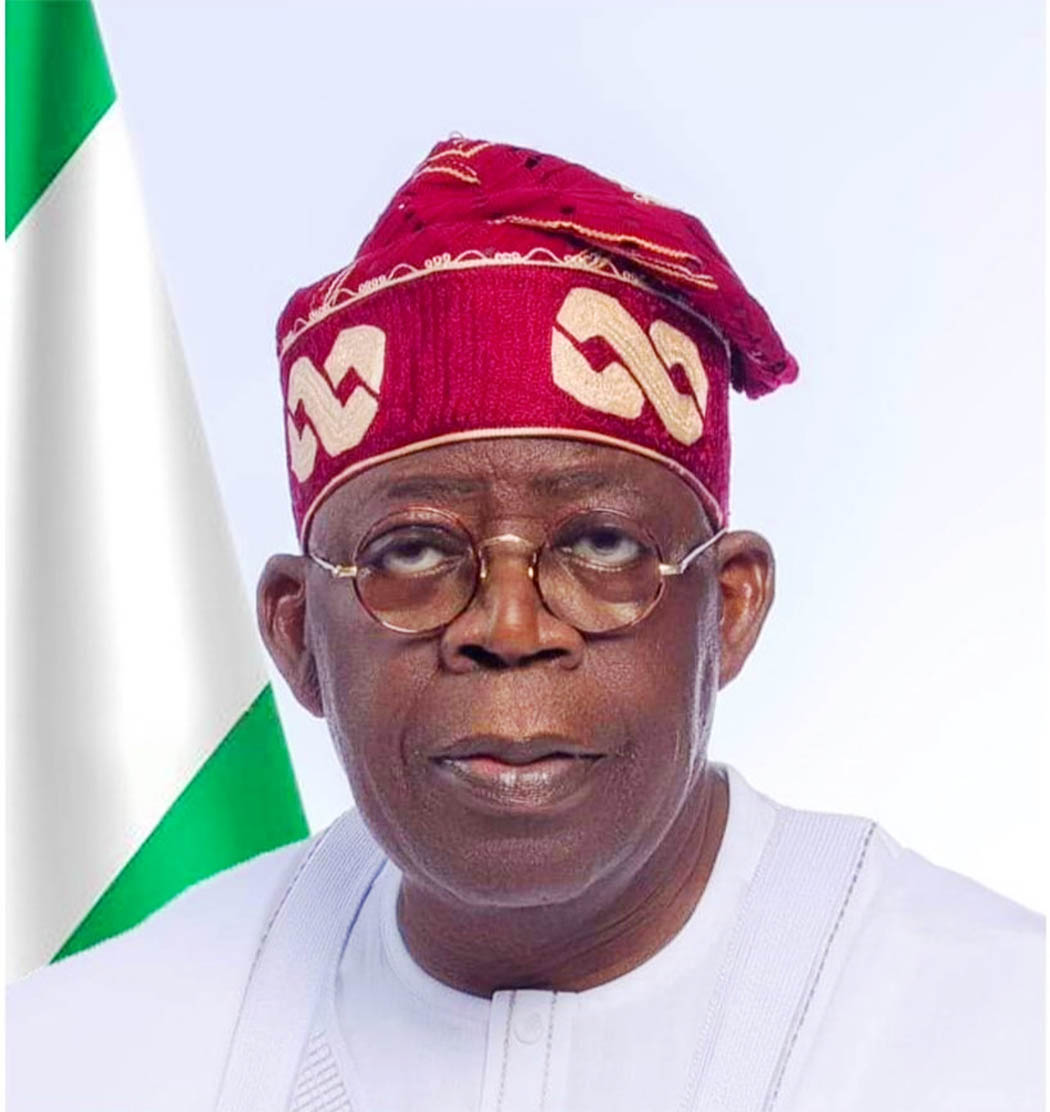
When The President Plays God With The Purse: The Dangers Of Fiscal Lawlessness
By Adamu Lawal Toro
The tranquility of the Aso Rock Villa was recently disrupted by a rather defensive press release from the Budget Office of the Federation. Dated January 7, 2026, it sought to swat away what it termed “public commentary on the repeal and re-enactment of the 2024 and 2025 Appropriation Acts, including claims of a constitutional breach” . But rather than settle the nerves of Nigerians, this convoluted defense of legislative maneuvering has done the opposite: it has confirmed our worst fears.
We are witnessing a slow but steady erosion of the very foundation of our constitutional democracy: the power of the purse. When a Chief Executive ignores the budget passed by the people’s representatives, funds projects not appropriated by law, and then relies on the complicity of the National Assembly to “regularise” this illegality through retroactive amendments, it tells us something profoundly disturbing about the occupant of the highest office and the trajectory of our governance.
First, let us state the obvious, as laid out in black and white by the Constitution. Sections 80 to 84 establish a clear, sequential framework: the Executive prepares estimates, the Legislature authorizes expenditure through an Appropriation Act, and only then can the Executive spend money from the Consolidated Revenue Fund . This is not a matter of administrative preference; it is the supreme law of the land.
However, the signal from the Presidency under Bola Ahmed Tinubu is that this law is merely a suggestion. The narrative coming from the National Assembly is damning. Despite the administration’s boasts of record budgets ,including the proposed N58.47 trillion for 2026 lawmakers are tearing their hair out over implementation . In mid-February 2026, the Senate Committee on Appropriations openly grilled the government’s economic team over the “consistent failures in budget implementation and the negligible release of capital votes” . Senator Solomon Adeola, a staunch ally of the government, had to remind the Nigeria Revenue Service that the executive alone is responsible for the unrealistic projections that lead to these failures .
But the issue goes deeper than poor planning. It points to a willful disregard for legislative authority. We have reached a point where the 2024 and 2025 budgets have required extensions and “re-enactments” because the money wasn’t spent when it was supposed to be. The Network for the Actualization of Social Growth and Viable Development (NEFGAD) rightly slammed this practice, warning that extending budget implementation for years “undermines Nigeria’s public finance framework” and “encourages fiscal indiscipline” . If the President ignores the 2024 budget to spend on 2025 priorities, and then goes to the National Assembly to ask for forgiveness rather than permission, the entire concept of a fiscal year becomes meaningless.
What does this tell us about President Tinubu? It tells us that he operates with an executive arrogance that views the Legislature not as a co-equal branch of government, but as a mere registry for stamping his decisions. It tells us that the principle of checks and balances, which Hon. Ibekwe recently described as preventing “any of the arms of government from arbitrariness,” is being treated as an inconvenient obstacle . It paints a picture of an administration that believes efficiency (or what it calls “the realities of implementation”) justifies autocracy.
The consequences of these actions are devastating, both for our immediate economy and the long-term health of our democracy.
Firstly, it cripples development. The 2026 budget proposal shows a terrifying trend: debt servicing (N15.91 trillion) is set to outpace the combined allocation for critical sectors like Works, Defence, Education, Health, and Agriculture . When funds meant for capital projects for roads, hospitals, and schools are either not released or are diverted to unauthorized “emergencies” or pet projects, the suffering is felt in the real economy. The Minister of Finance admitted that “emergency funding” has been released for security equipment, a euphemism that often bypasses the due process of appropriation . This is how infrastructure decays, and why contractors abandon sites.
Secondly, it breeds legislative irresponsibility. The National Assembly, which should be the bulwark against this behavior, appears complicit. When Senator Adeola threatens to cut the N58.47 trillion budget due to “unrealistic revenue projections” and “poor oil performance,” it sounds tough, but it also highlights a failure of prior oversight . Where was this scrutiny last year? By allowing the Executive to spend first and seek approval later through the “repeal and re-enactment” process defended by the Budget Office. The National Assembly is surrendering its constitutional duty. They are meant to control the purse, not simply hand over the keys to the treasury.
Thirdly, it destroys public trust. Nigerians are not fools. We see the roads crumbling while officials fly first-class. We see the disconnect between the grandiose budgets passed in Abuja and the paltry execution in our local governments. The move by the House of Representatives to amend the constitution to force a “timely presentation” of the budget is an admission of failure . It is a sad irony that we need a constitutional amendment to force the Executive to obey the existing constitution.
The Budget Office’s defense that the “repeal and re-enactment” process is lawful because the National Assembly assented to it is a dangerous sophistry . It argues that we can legalize a robbery after the fact if the police officer agrees to sign off on it. This ignores the spirit of the law. The Constitution does not envision a fiscal free-for-all where the Executive implements what it likes and then asks the Legislature to rewrite history.
President Tinubu must understand that the budget is not a wish list; it is a law. Ignoring it is no different than a governor ignoring a court order. If the 2024 budget is no longer workable, the constitutional path is clear: present a supplementary budget before spending, not seek an omnibus “re-enactment” months after the fact.
The 2026 budget cycle offers a chance for a reset. The Senate has set March 17, 2026, as the target for passage, and they have vowed “strict oversight” . For the sake of our democracy, we must hold them to that promise. We must demand that every naira spent is a naira appropriated. Otherwise, we are not running a constitutional democracy; we are running a kingdom where the President plays God with the public purse, and we are all left to pay the price.
Toro is a public affairs analyst.