
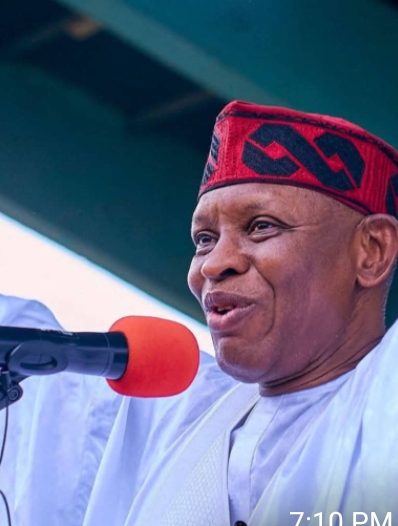
World Day Against Trafficking In Persons: Kano Must Lead The Fight Against Modern-day Slavery
A Call to Action for Governor Alhaji Abba Kabir Yusuf
Every year on 30 July, the world pauses to commemorate the World Day Against Trafficking in Persons, a day established by the United Nations to awaken global consciousness to one of the gravest violations of human dignity in our time. It is not merely an annual observance, it is a solemn reminder that millions of people remain trapped in modern-day slavery through deception, coercion, exploitation and abuse.
This year’s theme, “Human Trafficking is Organized Crime – End the Exploitation,” sends a powerful and unmistakable message. Human trafficking is not simply about migration or the movement of people across borders. It is a sophisticated criminal enterprise that generates billions of dollars annually by exploiting vulnerable men, women and children. It flourishes where poverty, unemployment, ignorance and weak law enforcement intersect.
The international community has spoken with one voice through the United Nations Convention against Transnational Organized Crime and its Palermo Protocol, which obligate States to prevent trafficking, protect victims, prosecute offenders and strengthen cooperation across borders. Nigeria is a State Party to these international instruments and has demonstrated its commitment through domestic legislation, including the Trafficking in Persons (Prohibition) Enforcement and Administration Act, while empowering the National Agency for the Prohibition of Trafficking in Persons (NAPTIP) to coordinate the national response.
Yet, despite these legal frameworks, the painful reality remains that human trafficking continues to thrive, often in silence.
Today, Kano State stands at a critical crossroads.
As Vice President of the Human Rights Watch and Youth Empowerment Foundation Nigeria, I have become increasingly alarmed by reports and community testimonies pointing to a dangerous and expanding trend. Across many communities in Kano State, able-bodied young men and women are being recruited and transported through illegal routes to Libya, Spain, Kuwait, Italy, Oman and other destinations under the false promise of employment, education or a better life.
For many families, these journeys begin with hope. Recruiters present themselves as successful businessmen, travel consultants or labour agents. They promise attractive salaries, decent accommodation and secure employment overseas. Parents, desperate to lift their families out of poverty, often sell inherited farmland, livestock, jewellery or take loans to finance these journeys, believing they are investing in a brighter future for their children.
Tragically, what follows is often a nightmare.
Many victims never reach their intended destinations. Some perish from hunger, dehydration or exhaustion while crossing the Sahara Desert. Others drown in the Mediterranean Sea while attempting perilous crossings in overcrowded boats. Those who survive frequently become victims of forced labour, domestic servitude, sexual exploitation, debt bondage, physical violence, psychological abuse and other cruel, inhuman and degrading treatment. Some are imprisoned by traffickers who demand ransom from already impoverished families, while others simply disappear without trace, leaving behind unanswered questions and lifelong grief.
This is not merely illegal migration.
It is organized crime.
It is exploitation.
It is modern-day slavery.
More disturbingly, trafficking networks have become increasingly sophisticated. They exploit digital platforms, encrypted messaging applications and social media to recruit unsuspecting victims. False success stories circulate online, creating the illusion that irregular migration guarantees wealth and prosperity. Meanwhile, countless stories of suffering remain untold because victims are either too ashamed, too traumatised or too frightened to speak.
The human cost extends far beyond individual victims. Families are broken. Communities lose productive youths. Children grow up without parents. The State loses valuable human capital needed for economic growth and sustainable development. Criminal syndicates become richer while society bears the burden of social instability and insecurity.
This disturbing trend should concern every responsible citizen and demand urgent attention from policymakers.
Your Excellency, Governor Alhaji Abba Kabir Yusuf has consistently demonstrated commitment to education, social welfare and youth empowerment. These priorities provide a strong foundation upon which Kano State can build one of Nigeria’s most comprehensive anti-human trafficking strategies.
The fight against trafficking cannot succeed through arrests alone. International best practices, reflected in the Palermo Protocol, emphasise four interconnected pillars, prevention, protection, prosecution and partnership.
Kano State should therefore establish a comprehensive anti-human trafficking policy that brings together government ministries, NAPTIP, law enforcement agencies, immigration authorities, traditional rulers, religious leaders, civil society organisations, educational institutions and community development associations under a coordinated framework.
Public enlightenment campaigns should extend beyond urban centres into every Local Government Area, ward and village. Communities must understand that the promises made by traffickers are often carefully constructed lies designed to exploit desperation.
Economic empowerment must equally become a central pillar of prevention. No young person should feel compelled to risk death in the desert or at sea because opportunity is absent at home. Expanded vocational training, entrepreneurship grants, digital skills programmes, agricultural value-chain development and access to microcredit can provide sustainable alternatives to dangerous migration.
The State Government should also strengthen intelligence gathering by encouraging community reporting mechanisms that protect whistleblowers and enable early detection of trafficking syndicates. Recruitment agencies operating within Kano should be properly screened, licensed and monitored to prevent fraudulent overseas employment schemes.
Equally important is the protection of survivors. Victims of trafficking should never be treated as criminals. They deserve rehabilitation, medical care, psychosocial counselling, legal assistance, education, vocational training and economic reintegration. Every rescued survivor represents not only a life restored but also a powerful testimony that can discourage others from falling into similar traps.
Religious and traditional leaders also have an indispensable role to play. Their influence within communities can reshape public attitudes, discourage irregular migration and reinforce the values of dignity, patience, lawful livelihood and communal responsibility. Parents, too, must resist the temptation to entrust their children to unverified recruiters whose only interest is financial gain.
The media must remain vigilant by exposing trafficking networks, amplifying survivors’ voices and promoting responsible public awareness. Silence only empowers traffickers.
As we commemorate this year’s World Day Against Trafficking in Persons, Kano has an opportunity to become a national model in the fight against modern-day slavery. By aligning state initiatives with Nigeria’s obligations under the Palermo Protocol and national anti-trafficking laws, the State can protect its youths, strengthen communities and deny criminal networks the opportunity to prey on vulnerable citizens.
History will judge our generation not by the speeches we delivered, but by the lives we saved.
The dreams of Kano’s young people should be realised through education, entrepreneurship, innovation and decent work not through dangerous desert crossings, overcrowded boats and the false promises of international criminal syndicates.
On this significant day, I respectfully call upon His Excellency, Governor Alhaji Abba Kabir Yusuf, to declare a statewide campaign against human trafficking and irregular migration, establish a multi-sectoral anti-trafficking task force, strengthen collaboration with federal agencies and development partners, and invest more boldly in youth empowerment as the most effective long-term antidote to trafficking.
Every child rescued from exploitation is a victory for humanity.
Every trafficker brought to justice is a triumph for the rule of law.
Every young person empowered at home is one less life lost to modern-day slavery.
The time to act is now. Kano must lead, because the future of our youths is too precious to be surrendered to traffickers.
Tijjani Sarki,
Vice PresidentHuman Rights Watch and Youth Empowerment Foundation Nigeria
Can be reached via responsivecitizensinitiative@gmail.com
30th July,2026