
By Abdulkarim Ibrahim
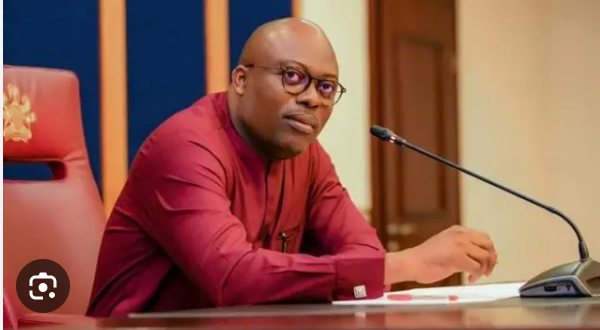
Rivers State Governor, Siminalayi Fubara, has assured residents of his readiness to collaborate closely with the State House of Assembly in order to rebuild momentum and fast-track the state’s socio-economic progress.
He emphasized that his administration would remain focused on initiatives that improve the lives of the people and restore public confidence in governance.
In his statewide address, Governor Fubara acknowledged that the period of emergency represented one of the most trying times in the history of Rivers State.
Related News:Fubara Poised To Resume Office As Ibas Prepares Transition After Emergency Rule In Rivers
He noted that the disruption tested the resilience of institutions and citizens alike, but also created an opportunity for renewed unity and collective determination.
The governor further explained that his choice not to challenge the presidential proclamation was a deliberate act of sacrifice for peace and stability.
According to him, Rivers State stands to gain more from reconciliation and steady governance than from prolonged confrontation, and he reaffirmed his commitment to pursuing harmony above personal or political interests.
“The President graciously brokered peace during this period, and we all accepted it, though not without the hard lessons learnt during the emergency rule,” he said.
Related News:Tinubu Justifies Emergency Rule In Rivers, Cites Constitutional Backing (Full Speech)
Governor Fubara stressed that the burden now rests on leaders across the state to rise above narrow personal ambitions and work collectively in pursuit of the common good. He noted that only through unity of purpose can Rivers State achieve the progress its people deserve.
He went on to express profound gratitude to President Bola Tinubu, whom he described as playing a “fatherly role” in ensuring that full democratic governance was restored to the state at a critical time. According to him, the President’s intervention reaffirmed his commitment to the stability of the federation.
The governor also recognized the contributions of his political mentor, former Governor Nyesom Wike, as well as the Senate President, the Speaker of the House of Representatives, and other stakeholders who stood firm in support of peace and reconciliation during the state’s challenging period.
In conclusion, Fubara extended his heartfelt appreciation to the Speaker and members of the Rivers State House of Assembly for their cooperation, pledging to deepen collaboration with them in the interest of the people and the state’s sustainable development.
Related News: Ibas Bows Out, Hands Over To Fubara, Boasts Of Restoring Peace in Rivers
He, however, noted the concerns of his supporters and assured them that “not everything is irretrievably lost” and that opportunities remain ahead.
He stated that “the costly peace is cheaper than the cheapest war,” stressing the need to build a more prosperous Rivers State.
He recalled his administration’s achievements before the emergency rule and promised to resume funding ongoing projects to ensure their completion.
He further reiterated his commitment to working with the House of Assembly in the interest of the state, while thanking the people of Rivers State for their resilience, peaceful conduct, and prayers.
Governor Siminalayi Fubara’s tenure took a turbulent turn only months after his inauguration in May 2023 when he fell out with his predecessor, now Minister of the Federal Capital Territory (FCT), Nyesom Wike. The clash, rooted in the struggle for political dominance in Rivers State, mirrored a familiar pattern between incumbent and former governors across Nigeria.
The rift soon spread to the State House of Assembly, splitting lawmakers into rival camps and escalating tensions within the political landscape. The division deepened the crisis, threatening governance and stability in the state.
Amid the escalating turmoil, President Bola Tinubu intervened on March 18 by declaring a state of emergency in Rivers State. The move led to the suspension of Governor Fubara, his deputy, Ngozi Odu, and members of the House of Assembly for six months, effectively halting democratic governance in the state.
In their place, President Tinubu appointed retired Admiral Ibok-Ete Ibas as the sole administrator, tasking him with steering the affairs of Rivers State during the emergency period. Ibas’s appointment marked an unusual but decisive step aimed at restoring order.
By June, the President convened a high-level peace meeting involving Fubara, Wike, House Speaker Martins Amaewhule, and other key political stakeholders. The dialogue was widely seen as a breakthrough toward reconciliation, signaling a willingness among the actors to set aside differences for the greater good of the state.
On Wednesday, September 17, Admiral Ibas formally handed back the reins of power, bringing an end to the emergency rule and returning democratic governance to Rivers State under Governor Fubara’s leadership.