
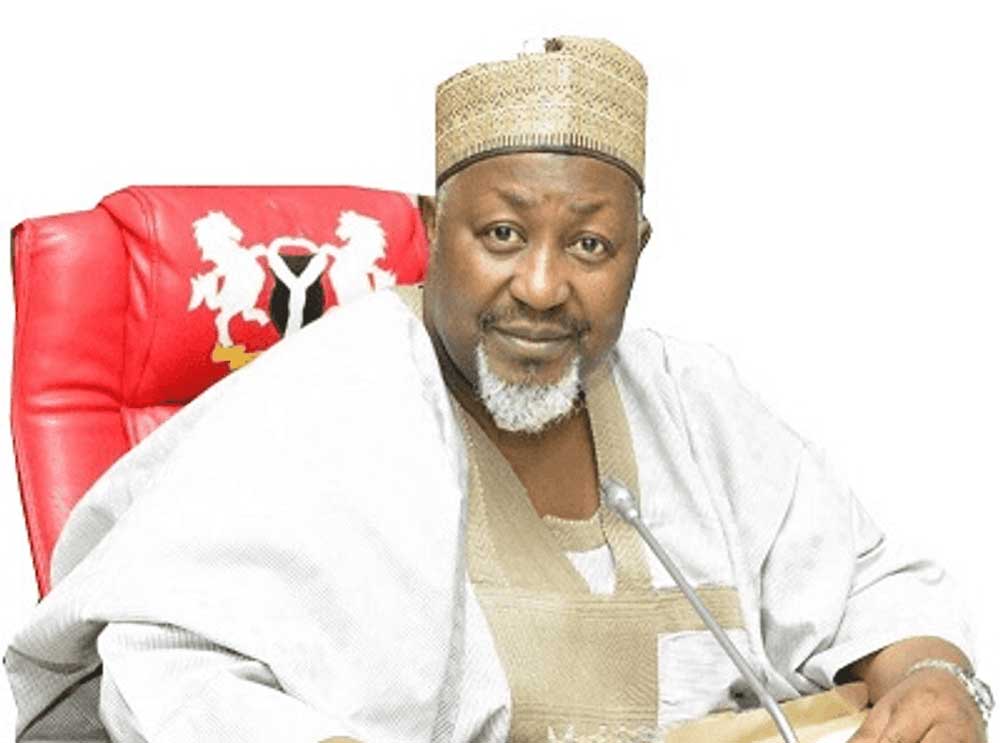
Nigeria’s Defence Minister Steps Down Amid Heightened Security Concerns
Nigeria’s Minister of Defence, Alhaji Mohammed Badaru Abubakar, has tendered his resignation with immediate effect, marking a sudden shift within President Bola Tinubu’s cabinet.
His decision was formally communicated through a letter dated December 1, in which he cited health-related reasons for stepping away from his sensitive national assignment.
According to Bayo Onanuga, Special Adviser to the President on Information and Strategy, President Tinubu has accepted Badaru’s resignation and expressed gratitude for his commitment and contributions to national service.
“In a letter dated December 1, sent to President Bola Tinubu, Abubakar said he was quitting on health grounds.
“President Tinubu has accepted the resignation and thanked Abubakar for his services to the nation.
President Tinubu will likely inform the Senate of Badaru’s successor later this week.” Bayo Onanuga has said
The Presidency also noted that preparations are underway for the nomination of a new defence minister to be forwarded to the Senate within the week.
Badaru Abubakar, aged 63, previously served as a two-term Governor of Jigawa State from 2015 to 2023, leaving behind a legacy of administrative reforms and political influence.
Also Read: Tinubu Confirms Plan To Establish State Police
His appointment as Minister of Defence on August 21, 2023, was widely viewed as an extension of his service to the nation in a period marked by escalating security challenges.
His exit from office comes at a crucial moment, coinciding with President Tinubu’s recent declaration of a national security emergency. The President is expected to unveil the full details and operational scope of the emergency measures in the coming days, signaling a renewed approach to tackling insecurity across the country.
The President had unveiled new measures including the recruitment of 20,000 additional police officers, deployment of forest guards, and heightened security for schools, churches and mosques in vulnerable communities.
There have also been persistent calls from some analysts for Abubakar’s removal, with critics arguing that he was unfit to lead the ministry.
The resignation has generated significant public interest, given Badaru’s central role in Nigeria’s defence operations and ongoing military reforms.
Analysts suggest that the transition may trigger a recalibration within the defence architecture as the government moves to strengthen its security machinery.
As the nation awaits the announcement of his successor, attention turns to how this change will shape the Tinubu administration’s broader security strategy, especially at a time when expectations for rapid intervention and decisive actions continue to rise.
Hours before the announcement of his resignation, Tinubu met privately with former Chief of Defence Staff, Gen. Christopher Musa (retd.), at the State House.
It was his first public meeting with the President since his retirement on October 24, 2025.
The purpose of the meeting could not be immediately confirmed, but it further fuelled speculation about who might replace Abubakar as Defence Minister.