
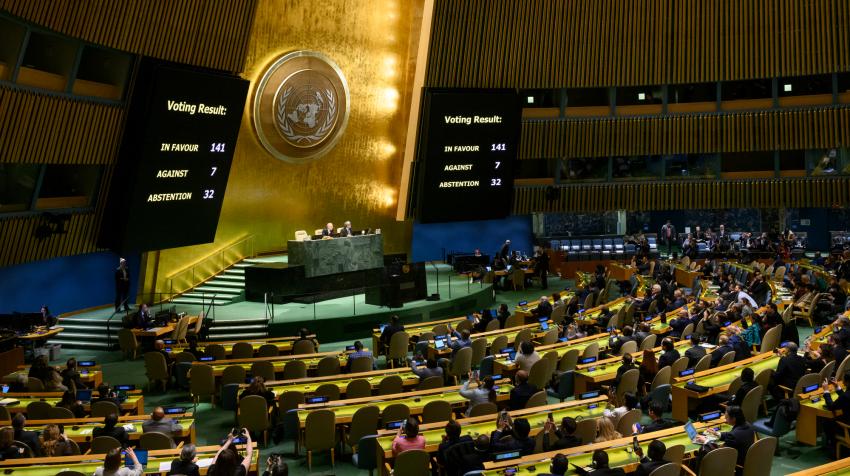
President Bola Ahmed Tinubu has renewed Nigeria’s call for a permanent seat on the United Nations Security Council, stressing that the body must be reformed to reflect present-day global dynamics and ensure equitable representation.
Delivering his message at the 80th session of the UN General Assembly through Vice-President Kashim Shettima, Tinubu underscored Nigeria’s record as a stabilising force in Africa and a dependable contributor to international peacekeeping efforts, saying this positions the country as deserving of a permanent voice in shaping global security decisions.
“A stabilising force in regional security and a consistent partner in global peacekeeping, our case for a permanent seat at the “Security Council is a demand for fairness, for representation, and for reform that restores credibility to the very institution upon which the hope of multilateralism rests,” he said.
Tinubu stressed that the United Nations must adapt if it is to remain relevant in a changing world, pointing out that Nigeria’s journey from a 20-million-person colony in 1945 to a sovereign nation of more than 236 million people today demonstrates the urgency for institutional reform.
He tied this demand to wider economic and social issues, calling for swift measures on sovereign debt relief, fairer access to global trade and financial systems, and the strategic use of Africa’s abundant resources to drive sustainable development.
The Nigerian leader warned that without such reforms, the UN risks losing credibility in the eyes of developing nations, whose populations bear the brunt of global inequality and exclusion from decision-making.
His message resonated with similar demands raised by Kenya’s President, William Ruto, who earlier urged member states to support restructuring of the Security Council to reflect present-day realities.
Ruto pressed for Africa’s full representation in the Council, proposing the allocation of at least two permanent seats with veto power and two additional non-permanent seats to give the continent a stronger voice in global governance.
“You cannot claim to be the United Nations while disregarding the voices of fifty-four nations, it is impossible. Africa will no longer remain on the margins of global governance while decisions on peace, security, and development are made without our perspectives and our voice.
“Excluding Africa is not only unacceptable, unfair, and grossly unjust, it undermines the very credibility of this organization. Africa dominates much of the Security Council’s agenda, provides some of the largest contingents of UN peacekeepers, and bears the heaviest costs of instability. Yet, we remain the only continent without a permanent seat.
“Reforming the Security Council is not a favor to Africa or to anybody. It is a necessity for the United Nations’ own survival,” Ruto said.
The United Nations Security Council is tasked with maintaining global peace and security. It consists of 15 members—five permanent powers with veto rights and ten non-permanent members elected for limited terms.
The Council has the authority to investigate disputes, recommend peaceful solutions, impose sanctions, and, in extreme cases, authorize the use of military force. Its decisions carry binding weight under international law.
Yet, the body is often criticized for being outdated and unrepresentative. Africa, with more than 50 countries and a significant share of the world’s population, remains largely excluded from the Council’s leadership structure. This imbalance stems from the 1945 global order, when most African nations were still under colonial rule.
Critics argue that the absence of permanent African representation is unjust, particularly as the continent bears a disproportionate share of today’s conflicts. Ironically, many of the Council’s most decisive interventions—ranging from peacekeeping to crisis management—have taken place in Africa itself.