
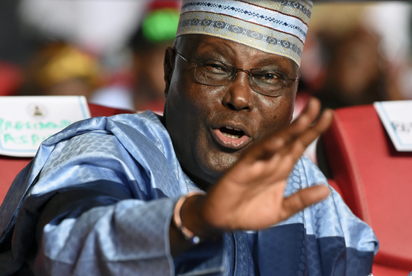
Atiku’s Subsidy Plan Sparks Fresh Clash Over Nigeria’s Economic Direction
Former Vice President Atiku Abubakar’s proposal to restore a targeted petrol subsidy if elected in 2027 has triggered a fresh political and economic dispute, with the Presidency and the All Progressives Congress (APC) accusing him of reversing his previous position for electoral advantage.
Other presidential contenders, however, have used the debate to challenge both the Tinubu administration’s approach to subsidy removal and Atiku’s record on the issue.
Atiku, the presidential candidate of the African Democratic Congress (ADC), said his proposed intervention would be limited, targeted and transparent, with a clear plan for eventual withdrawal.
In a statement issued in Abuja by his Senior Special Assistant on Public Communication, Phrank Shaibu, Atiku argued that the government’s claim that petrol subsidy had been abolished was difficult to reconcile with continuing fiscal interventions in the petroleum sector.
He cited audited accounts of the Nigerian National Petroleum Company Limited (NNPC), which he said showed that government resources were still being used to absorb some petrol price differentials.
According to Atiku, NNPC recorded about N4.84 trillion in energy-security expenses and related shortfalls in 2023, while its 2024 audited financial statements recorded approximately N7.13 trillion under energy-security expenses.
He said NNPC had attributed part of the expenditure to differences between the exchange rate used in determining regulated Premium Motor Spirit (PMS) prices and the prevailing rate when import obligations were settled.
Atiku argued that changing the description of such expenditure from subsidy to “shortfall,” “under-recovery” or “energy security” did not alter its economic substance.
“Nigerians do not eat semantics. Whether government calls it subsidy, under-recovery, shortfall or energy security, public resources were being used to bridge a gap between economic cost and the price at which petrol was sold,” he said.
The former vice president also criticised tax incentives available to oil investors, citing the Deep Offshore Oil and Gas Projects Incentives framework, under which qualifying projects can receive production tax credits.
He argued that the government appeared willing to provide fiscal concessions to large oil investments while leaving households to bear the full impact of rising petrol prices and the wider cost-of-living crisis.
Atiku said his proposed Atiku Economic Recovery Plan would introduce a capped and independently audited intervention rather than revive what he described as the opaque and corruption-prone subsidy system of the past.
The proposal, according to him, would combine targeted subsidy support with accelerated domestic refining, increased competition in the downstream sector, improved mass transportation and measures to restore household purchasing power.
He also demanded greater disclosure of petroleum tax concessions granted by government, including the beneficiaries and revenue forgone.
Presidency accuses Atiku of political U-turn
The Presidency rejected Atiku’s proposal, describing it as an opportunistic reversal of the position he took during the 2023 presidential election.
The Special Adviser to the President on Media and Public Communications, Sunday Dare, accused the former vice president of attempting to exploit the economic difficulties created by reforms for electoral advantage.
Dare recalled that Atiku had previously supported the removal of petrol subsidy, which he had described as unsustainable and vulnerable to corruption.
He argued that Atiku’s renewed support for subsidy ahead of another election represented a sharp departure from his earlier position.
According to Dare, Atiku’s position amounted to an attempt to convert the hardship associated with economic reforms into political capital.
The Presidency acknowledged that subsidy removal had created short-term pressure on households and businesses but maintained that the reform had released substantial resources to the three tiers of government while creating fiscal space for investment in productive sectors.
Dare also argued that the policy had contributed to the expansion of domestic refining capacity and reduced Nigeria’s dependence on imported refined petroleum products.
He warned that a return to the former subsidy regime could weaken investor confidence, undermine local refining and put renewed pressure on the country’s foreign exchange position.
“The old import subsidy regime was not merely a pricing mechanism; it was a black hole of rent-seeking, round-tripping and monumental corruption that starved health, education and infrastructure of vital capital,” he said.
The Presidency challenged advocates of subsidy restoration to explain how the policy would be financed without recreating the fiscal pressures and governance problems associated with the previous system.
It maintained that Nigerians deserved consistent economic policies and sustainable alternatives rather than electoral promises designed to take advantage of temporary economic difficulties.
APC chair demands funding details
APC National Chairman, Nentawe Yilwatda, also criticised Atiku’s proposal, saying any plan to restore petrol subsidy must clearly explain its funding mechanism and long-term sustainability.
Yilwatda said Nigerians deserved more than election-season declarations, arguing that subsidy restoration could reopen the fiscal pressures that necessitated its removal.
He spoke during a visit to the headquarters of the City Boy Movement in Abuja, where he inspected the organisation’s facilities and interacted with its leadership.
The APC chairman said the opposition had been challenged to present alternative economic policies but had yet to provide what he considered a convincing governing agenda.
He questioned the timing of Atiku’s proposal, arguing that it had emerged months before the 2027 elections.
“Economic policy cannot be reduced to election-season promises. Nigerians deserve to know precisely where the money will come from, what sectors will bear the cost and whether such a policy can be sustained without reopening the fiscal pressures that necessitated reform in the first place,” he said.
Yilwatda maintained that subsidy removal was a difficult but necessary decision, while acknowledging the need for measures to cushion its impact, expand social intervention and strengthen productive sectors.
He urged voters to scrutinise the economic programmes of presidential candidates and distinguish between policies addressing structural challenges and proposals offering short-term political appeal.
Hashim challenges Atiku’s record
Presidential candidate of the Accord Party, Gbenga Olawepo-Hashim, described Atiku as the “father of subsidy removal” in Nigeria’s Fourth Republic and demanded an explanation for his change of position.
Hashim argued that Atiku, Tinubu and Labour Party presidential candidate Peter Obi had all campaigned for subsidy removal during the 2023 presidential election, while he, Omoyele Sowore and Adewole Adebayo opposed the policy.
He said changing a position was not inherently wrong where circumstances or evidence had changed, but politicians should explain the reasons for such reversals.
“Atiku’s recantation on subsidy removal without an apology is dishonesty. If you change your position because circumstances or evidence have changed, tell Nigerians why you changed,” he said.
Hashim recalled Atiku’s involvement in the economic policies of the Olusegun Obasanjo administration, including the increase in petroleum prices and efforts to remove subsidies.
He said he and other individuals had publicly opposed the policy at the time, arguing that Nigerians should not suddenly be presented with a different position simply because another election was approaching.
Hashim nevertheless reiterated his support for targeted subsidies on petroleum products and other strategically important goods, provided they were transparently administered.
He proposed a system based on clear eligibility criteria, published fiscal costs, measurable economic outcomes and strict accountability.
According to him, subsidies should be used as a temporary bridge towards greater domestic production rather than as a mechanism for perpetuating import dependence.
Sowore rejects Atiku’s economic credentials
Human rights activist and African Action Congress (AAC) presidential candidate, Omoyele Sowore, also dismissed Atiku’s proposal, arguing that the former vice president represented the same political establishment that had failed Nigerians over the years.
Sowore said Atiku had been part of Nigeria’s political leadership since the 1980s, including eight years as vice president.
He questioned what fundamentally different economic direction Atiku could offer after decades at the centre of Nigerian politics.
Sowore also criticised the economic record of the administration in which Atiku served as vice president, particularly in the power sector.
He argued that despite substantial public spending on electricity during that period, millions of Nigerians continued to experience inadequate power supply.
“Nigeria does not need another recycling of the same political elite. We need a clean break from the system that produced poverty, corruption, insecurity and darkness,” he said.
Duke seeks new economic direction
Former Cross River State governor and presidential candidate of the Peoples Redemption Party (PRP), Donald Duke, called for a broader rethink of Nigeria’s economic direction.
Duke argued that the country would gain little from simply continuing with the economic policies of the Tinubu administration.
He advocated policies designed to transform Nigeria’s natural and human resources into productive assets capable of generating jobs, increasing incomes and reducing poverty.
The former governor said economic performance should not be measured solely by government revenue and foreign reserves but also by improvements in household welfare and living standards.
He urged Nigerians to demand economic policies that could produce tangible improvements in their daily lives rather than relying on political rhetoric.
The renewed debate over petrol subsidy is therefore shaping up as a major economic issue ahead of the 2027 elections, with political actors divided over whether subsidy removal represents a necessary structural reform or a policy that should be modified to protect households from rising living costs.
While Atiku has proposed a capped and targeted intervention with a defined exit strategy, the Presidency and APC insist that restoring subsidy could revive the fiscal leakages and distortions associated with the former system.
The competing positions are likely to remain central to the wider debate over how Nigeria can balance fiscal sustainability, affordable energy, domestic production and relief for citizens ahead of the 2027 presidential election.