
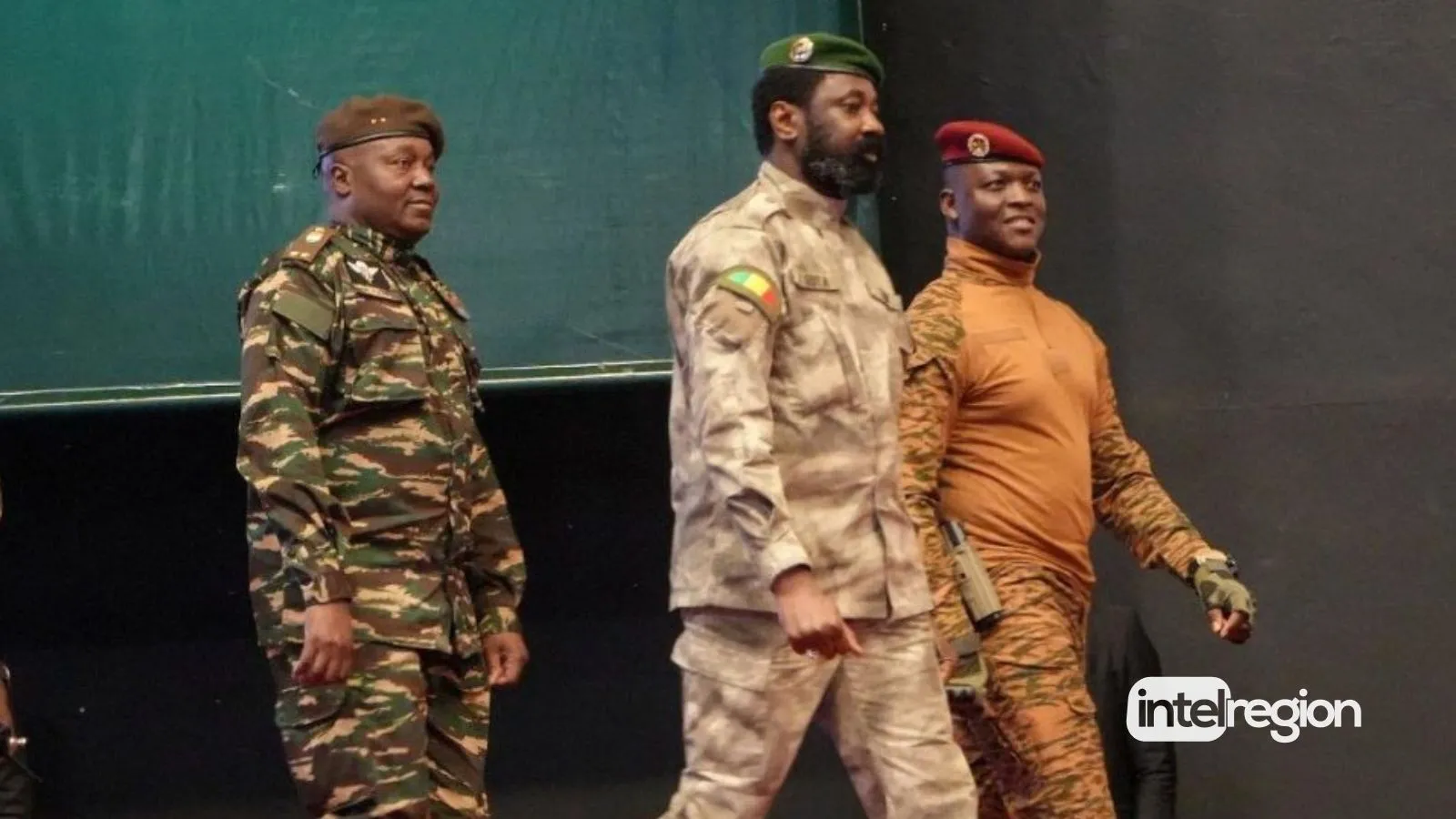
The military-led governments of Mali, Burkina Faso, and Niger have formally announced their withdrawal from the International Criminal Court (ICC), describing it as nothing more than “a tool of neo-colonial repression.”
The joint declaration, released on Monday, marks yet another significant rupture in West Africa’s diplomatic landscape, which has already been shaken by a wave of coups across the Sahel between 2020 and 2023.
Having severed ties with the West African regional bloc ECOWAS, the three juntas have consolidated their partnership under a new framework called the Alliance of Sahel States, signaling a decisive break from traditional regional alliances.
In addition to turning their backs on ECOWAS, the trio has reduced military cooperation with Western nations, while steadily deepening political and security engagements with Russia.
Citing reports by AFP, Barron’s noted that in their latest statement, the governments accused the ICC of functioning as “an instrument of neo-colonialist repression in the hands of imperialism,” underscoring their rejection of Western-led institutions.
“The ICC has proven itself incapable of handling and prosecuting proven war crimes, crimes against humanity, crimes of genocide, and crimes of aggression,” the statement read.
“The governments added that they intended to develop “indigenous mechanisms for the consolidation of peace and justice.”
According to ICC statutes, a country’s withdrawal only takes effect one year after its formal notification is lodged with the UN secretary-general, meaning the Sahel states’ exit will not be immediate.
The decision highlights their growing tilt toward alternative alliances, particularly with Russia—whose leader, Vladimir Putin, has himself been under an ICC arrest warrant since March 2023 in connection with the war in Ukraine.
Meanwhile, Burkina Faso, Mali, and Niger remain locked in protracted battles against jihadist insurgents affiliated with Al-Qaeda and the Islamic State, even as their own security forces stand accused of grave human rights violations against civilian populations.
Founded in 2002 and based in The Hague, the International Criminal Court was designed as a tribunal of last resort to hold individuals accountable for crimes against humanity, war crimes, and genocide when domestic justice systems fail.
Yet, of the 33 cases pursued by the ICC since its establishment, all but one have centered on African nations—fueling perceptions of bias and reinforcing claims that the Court unfairly targets the continent.