
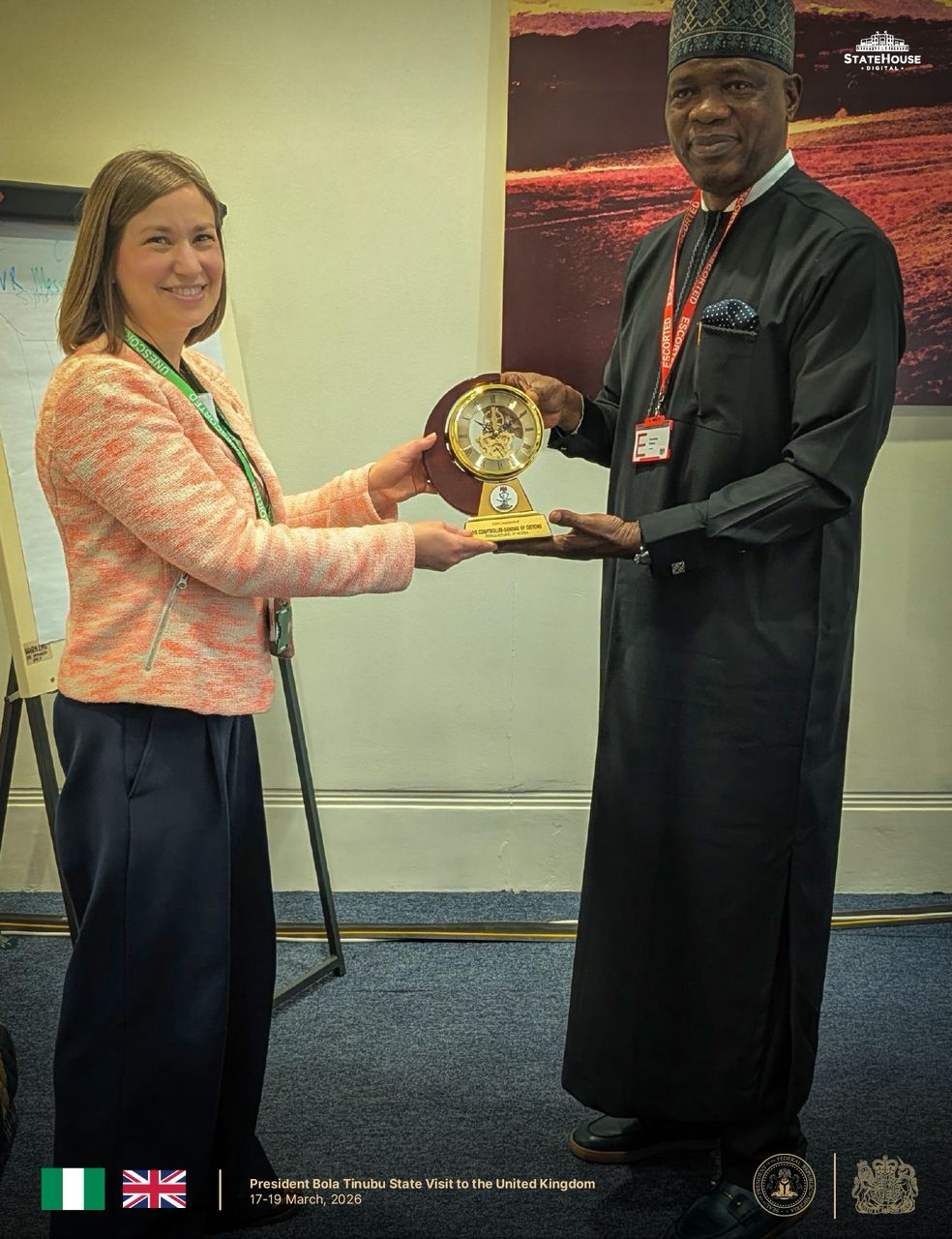
NCS, HMRC strengthen Cooperation To Advance Trade Facilitation, Digital Border Management
In a bold push to tighten trade efficiency and usher in a new era of digital border governance, the Nigeria Customs Service (NCS) has deepened its strategic alliance with the United Kingdom’s HM Revenue and Customs (HMRC), signaling a major leap in bilateral customs relations.
The high-stakes engagement, held in London on March 18, 2026, took place under the Nigeria-UK Enhanced Trade and Investment Partnership (ETIP), on the sidelines of the state visit of President Bola Ahmed Tinubu to the United Kingdom. It brought together top customs officials determined to recalibrate trade systems between both nations.
Leading the charge were the Comptroller-General of Customs, Bashir Adewale Adeniyi, and HMRC’s Head of International Customs and Border Engagement, Megan Shaw. Both officials drove conversations focused on modernising customs operations, boosting transparency in trade data, and strengthening operational ties across the Nigeria–UK trade corridor.
Adeniyi did not mince words as he underscored the strategic weight of customs cooperation, describing it as a backbone for economic expansion and sustainable trade. He highlighted the deep-rooted commercial ties between Nigeria and the UK, spanning industrial goods, agriculture, energy, and consumer markets—sectors that continue to define the pulse of bilateral trade.
However, beneath the optimism lies a critical concern: a glaring mismatch in trade data. While Nigeria recorded approximately £504 million worth of UK imports in 2024, the UK reported exports to Nigeria at a significantly higher £1.7 billion. Both parties acknowledged this discrepancy as a systemic issue demanding urgent and coordinated intervention.
To close this gap, the two customs giants are exploring a game-changing solution, a structured pre-arrival data exchange system between their digital platforms. This move is expected to sharpen risk management, improve data accuracy, and strengthen compliance monitoring, effectively plugging loopholes in the trade system.
The talks also spotlighted the UK’s cutting-edge customs technologies, including artificial intelligence-driven trade tools, digital verification systems, and real-time analytics—innovations that could redefine Nigeria’s border management architecture. For Nigeria, this signals not just collaboration, but a potential tech-powered transformation of its customs processes.
Key outcomes from the meeting include plans to establish a Customs Mutual Administrative Assistance Framework, initiate technical groundwork for capacity building, and activate a joint technical engagement mechanism under ETIP—steps that observers say could reshape trade facilitation between both countries.
Reaffirming its stance, the NCS pledged to leverage the partnership to accelerate its modernisation drive, boost transparency, and enhance Nigeria’s competitiveness in the global trade arena. The Service also assured stakeholders that lessons from the engagement would translate into improved operational efficiency and stronger alignment with the Federal Government’s economic reform agenda.
As Nigeria leans into digital innovation and international cooperation, this renewed alliance with HMRC may well mark a turning point where data meets diplomacy, and trade meets transformation.